
Grinder Technology
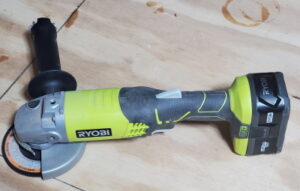
Grinders truly are the workhorse of all tools. We do know that there are other types of grinders that can be used for various projects and that certain types of sanders, like a floor sander or a belt sander, can be adapted to act in the same way as a grinder. If you’re interested in adapting a belt sander to function as a grinder you can check out our Article about Belt Sanders to learn more.
For this article though, we will be looking at 5 categories of grinders. Angle grinders, belt grinders, bench grinders, wet grinders, and die grinders.
Angle Grinders
Angle grinders, which come in both corded and battery powered options, are one of the most versatile tools in the grinder category. This versatility is due to the ability to interchange the grinding disc. Usually used in the metal fabrication industry grinders can do jobs such at cutting, finishing, polishing, deburring and grinding. But the versatility goes beyond just metal fabrication. You can do jobs such as cutting tile, landscape pavers and stucco. It can also be used to remove that nasty looking grout in your bath or kitchen.
We are working hard to bring you a comprehensive article on angle grinders. However, we could really use your help. Here is what we have so far: Article about Angle Grinders
Sharing your experiences with angle grinders through our feedback tools would be appreciated.
Bench Grinders
Designed with two wheels the bench grinder is great for polishing and finishing metal jobs and for sharpening tools such as scissors, screwdrivers, punches, chisels, knives, and drill bits. The two wheels typically use a 60 grit wheel for polishing and finishing and a 36 grit wheel so you can sharpen with accuracy. Some models of bench grinder offer features like a water tray to cool your tools so they don’t overheat and bend or warp. The addition of a built-in drill bit rest on some models allow you to get the perfect angle on your bits every time. Another useful feature too is an attached light.
We are still working hard to bring you an in-depth article on Bench grinders. However, we could really use your help. Please take a look at what we currently have. Article about Bench Grinders
Belt Grinders
Belt grinders and belt sanders are oftentimes confused or even considered the same tool. However, there are differences between the machines. Belt sanders are typically used to refine, sand to a finish or even mold certain shapes in a variety of materials. Whereas the belt grinder focuses on metal items. The design of the belt sander can vary with some models offering a grinding disc, usually on the left side of the machine to allow users to use the grinder for both sharpening items in the same way a bench grinder would operate and to use the belt function of the machine to refine and finish a piece of work. The belts, much like grinding discs for an angle grinder, give the belt grinder versatility.
Our TekEons Researchers are still working on data collections for Belt grinders. But we could really use your help to make our Article about Belt Grinders awesome.
Your feedback would really help us out.
Wet Grinders
Wet grinders, also known as a wetstone grinders, are a variation of the bench grinder. Wet grinders use water held in a small reservoir to moisten the wheel and reduce or eliminate the heat generated from the sharpening process. This type of sharpening tool is almost a necessity for any serious woodworker. Most woodworkers will know the benefits of using a wet grinder to achieve a precise edge on their chisels and gouges. Wet grinders can also be used to sharpen things like pocket and whittling knives, and even larger bladed tools like hatchets and hand axes.
Our TekEons Researchers are still researching Wet grinders. Your Feedback would really help us out. See what we have so far: Article about Wet Grinders
Die Grinders
A die grinder differs from the other type of grinders we have discussed so far in that it is used more as a precision cutting and sculpting tool. This type of grinder was, and still is used in the tool and die work industries. However, the CNC router is slowly taking the place of the die grinder by being able to achieve an accuracy of 0.01 millimeters through the use of sophisticated computer software. Die grinders and rotary tools, like the ones made by Dremel, are often times lumped in together as the same tool. Even though there are some differences between them they are able to achieve the same outcome. Die grinders though come in 3 main types, electric corded, battery-powered, and pneumatic.
Our TekEons Researchers are still exploring all there is to Die grinders. Your Feedback would really help them out. Here is what we have so far on Die Grinders.