
Saw Technology
Modern-day construction and woodworking would not be the same without saws. There is a multitude of saws on the market from many different manufacturers. However, in this article, we will look at 6 of the major types of saws used in construction and woodworking. Below you will find a convenient drop down menu for each of the saws we will discuss.
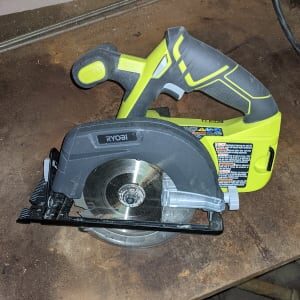
First, let’s explore circular saws. These come in both corded and cordless options. Typically cordless circular saws are smaller than the corded variety with blades that range from 5 ½ to 6 ½ inch blades. A cordless saw would be ideal if you are working in a confined space. Some of the pros of the corded circular saw are the ability to make large cuts as the blade is usually 7 ¼ inch in diameter. Also, you can make continuous cuts without the need to change batteries.
We are still hard at work gathering all of our data for our completed article on Circular Saws.
Your feedback can help us complete the article. The convenient feedback form can be found at the bottom of this page or any TekEons page.
Let’s look at reciprocating saws next. The first reciprocating saws were introduced by Milwaukee in 1951 as a Sawzall. Even 70 years later the reciprocating saw is commonly referred to as a Sawzall no matter the manufacturer. These types of saws are often used in demolition work, home remodels, cutting PVC pipe, and shearing nails.
We don’t know everything about reciprocating saws. We could use your help finishing our stub Article About Reciprocating Saws. Submitting feedback about the different reciprocating saws you have used helps us see the full picture of these tools. You fill out the feedback form at the bottom of any page on the TekEons Network.
Band saws are the next type of saw that we are going to detail. There are 4 major sizes of band saws.
- Portable
- Benchtop
- Stand mounted
- Floor standing
Table saws come in both portable and stationary models but within each of the categories there are specific types of models.
Portable table saws consist of these types, Benchtop, Compact, and Jobsite.
Stationary Table saws consist of these types, Contractor, Hybrid (made with built-in belt drive induction motors), and cabinet.
Our research is still ongoing for table saws but you can help us by submitting any feedback you might have on the various types of table saws. You can view our Table saws article and fill out the feedback form on that page or on any one of the TekEons pages.
This saws are one of those saws that almost every woodworker is going to want to have in his/her arsenal. These tools are great for making precise cuts based on a stencil or any other type of irregular cut. The versatility of the Jigsaw is pretty cool too. Depending on the type of blade(s) you are using you can cut through stuff like wood, plastics, metals of differing density, cement backer board, and even bricks.
Our TekEons researchers are hard at work reviewing and comparing the different brands of Jig saws. However, you can help them by submitting your experiences with Jig Saws through our convenient feedback form at the bottom of this page or on our Jigsaws article page found here: Article about Jig Saws
Mitre saws (often misspelled miter) are the last type of saw we are going to look at in this article. There are 3 main types of mitre saws
- Sliding Mitre saws, which accommodate larger materials
- Compound Mitre saws, which are usually used on smaller materials
- Compound Sliding Mitre saws, which combine the capabilities of the other 2 saws
One of our TekEons Researchers is a hobbyist woodworker and has an old Chicago Electric compound sliding mitre saw that, despite a couple of rust spots on the slide bars, has held up very well.
While we do have some research on mitre saws we could use your help to gather more research on all the types of mitre saws. Firstly, you can view our Article about Mitre Saws and then fill out the feedback form at the bottom of that page or on any of the pages in the TekEons Network.